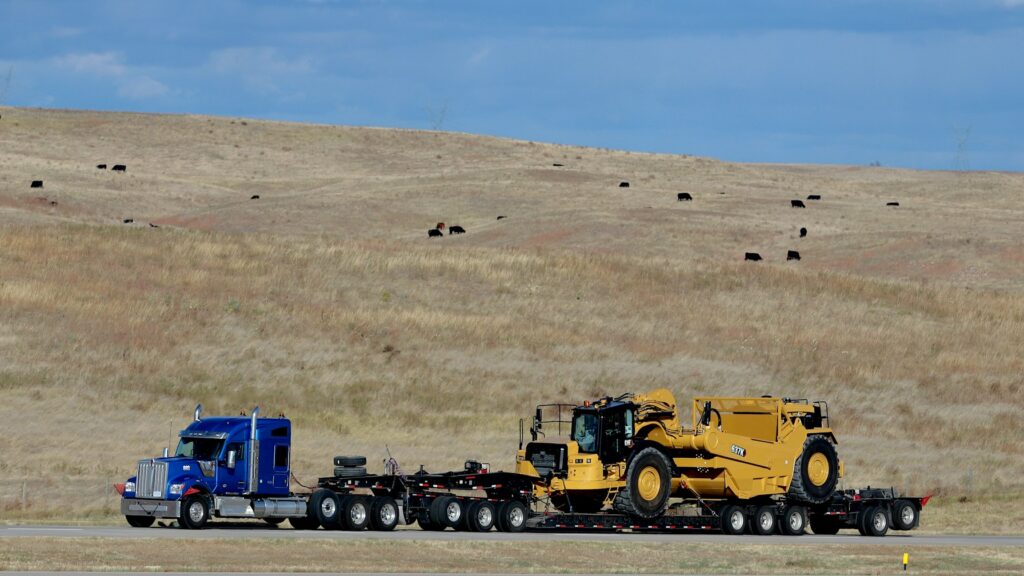
A flatbed is a flat, open trailer with one level deck, while a step deck (also called a drop deck) has a short upper deck and a longer, lower deck behind it. The lower deck lets a step deck carry taller freight within height limits, which is the main reason to choose one over the other.
Both are open-deck trailers, so both haul freight that is loaded from the side or top and secured with straps, chains and sometimes tarps. Here is how they differ and what a dispatcher should ask before booking either one.
Key takeaways
- A flatbed has one flat deck. A step deck has an upper deck and a lower deck.
- Step decks suit taller freight, like machinery and equipment, because the lower deck sits closer to the ground.
- Flatbeds suit freight that is long or heavy but not too tall, like lumber, steel and building materials.
- Always get the exact length, width, height and weight of the freight before you book.
- Height and width limits and permits are set by law and vary by state. Check state permit rules every time.
What is the difference between a step deck and a flatbed?
The difference is the shape of the deck. A flatbed is level the whole way. A step deck has a “step” down behind the tractor, so most of its deck sits lower than a flatbed’s.
That lower deck matters because legal height is measured from the road to the top of the freight. The lower the deck, the taller the freight can be while the total height stays legal.
| Feature | Flatbed | Step deck |
|---|---|---|
| Deck shape | One flat, level deck | Short upper deck, then a longer lower deck |
| Common lengths | Often 48 or 53 feet | Often 48 or 53 feet in total |
| Deck height | Higher off the ground | Lower deck sits closer to the ground |
| Best for | Lumber, steel, pipe, building materials | Machinery, equipment, taller crates |
| Loading | Forklift or crane from the side or top | Same, and some carry ramps for drive-on equipment |
| Main limit | Freight height | Usable length on the lower deck |
Trailer sizes vary by manufacturer and model. Always confirm the exact deck lengths and heights with the carrier.
When should you use a step deck instead of a flatbed?
Use a step deck when the freight is too tall to sit on a flatbed and stay within height limits. Use a flatbed when the freight is long, heavy or needs the full flat deck, and its height is not a problem.
- Step deck freight: farm and construction equipment, machinery, tall crates, vehicles that can drive up ramps.
- Flatbed freight: lumber, steel coils and beams, pipe, roofing, bricks and other building materials.
- Either one: some freight fits both. Then the choice often comes down to which truck is available and what pays better for the carrier.
If you are new to open-deck work, start with our flatbed dispatching guide for new dispatchers, which covers securement, tarping and the questions brokers ask.
What legal limits should a dispatcher know?
Width and height limits decide whether a load is legal as is, or needs permits. Here is the general picture, and you should always check the current rules for every state on the route.
- Width: the standard legal width for a trailer and its load on major highways is 8.5 feet (102 inches) under federal rules. Wider loads are oversize.
- Height: there is no single national height limit. States set their own, and many are around 13 feet 6 inches, with some higher. Low bridges can also limit a route.
- Weight and length: limits depend on the state, the road and the truck’s axles, so check them for each route.
- Permits: an oversize or overweight load needs a permit from each state it passes through, and some need escort vehicles or travel-time limits.
- Securement: FMCSA has cargo securement rules that drivers must follow for open-deck freight.
This is general information only. Limits and permit rules change and vary by state. Check state permit rules and the current FMCSA securement rules before you book.
A worked example
The numbers below are an example only. Real deck heights and state limits vary, so always check.
A broker offers a load: one machine, 20 feet long, 8 feet wide and 9 feet tall. Your carrier runs a flatbed. Suppose its deck is 5 feet off the ground. The total height would be 14 feet, which is over the limit in many states and would need permits.
Now suppose a step deck with a lower deck 3.5 feet off the ground. The same machine reaches 12.5 feet in total, which is within common height limits. The 20-foot machine also fits on the lower deck.
So you would tell the broker your flatbed is not the right truck, or check with the carrier about permits. If you also dispatch a step deck, this is the load for it.
What should you ask before booking an open-deck load?
Get these answers before you agree on a rate. Open-deck loads go wrong when details are missing.
- Exact dimensions: length, width and height of every piece.
- Weight: total weight and the weight of each piece.
- Loading method: forklift, crane, or driven on with ramps.
- Securement: how many straps or chains, and whether the shipper requires edge protection.
- Tarps: whether the freight must be tarped, and what size tarps.
- Permits: whether the load is legal as is, or who arranges and pays for permits.
- Extra pay: whether tarping or extra stops are paid, written on the rate con.
Our free dispatcher tools help you practice the checks you make before booking any load.
Frequently Asked Questions
Is a drop deck the same as a step deck?
Yes. Drop deck and step deck are two names for the same type of trailer, with an upper deck at the front and a lower main deck behind it.
What is a Conestoga trailer?
A Conestoga is a flatbed or step deck with a sliding tarp system that covers the freight like a curtain. It protects freight from weather without the driver tarping by hand.
What is a lowboy trailer?
A lowboy has a deck that sits even closer to the ground than a step deck. It is used for very tall or heavy equipment, and often involves permits.
Does a flatbed driver need to tarp every load?
No. Tarping depends on the freight and the shipper’s requirements. Always ask, because tarping takes time and should be agreed in writing.
Learn open-deck dispatching the right way
The Dispatcher 101 Dispatching Guide covers trailer types and freight in its Equipment and Freight section, so you can match the right truck to the right load. Students on both plans get 1-on-1 mentorship with Joe Piazza to ask about a real open-deck load before booking it. The Gold plan adds the agreements and templates, 12 months of load board access, the Certificate of Completion and a 14-day money-back guarantee.