Description
Complete guide to truck dispatcher training in Texas. Learn how to launch a remote freight dispatching career in Dallas, Houston, San Antonio, and the Texas Freight Triangle starting at $55/month.
Truck Dispatcher Training in Texas: Complete 2026 Guide
TLDR
- High-Demand Region: The "Texas Triangle" (Dallas-Fort Worth, Houston, San Antonio, Austin) represents one of the highest-density freight corridors in North America.
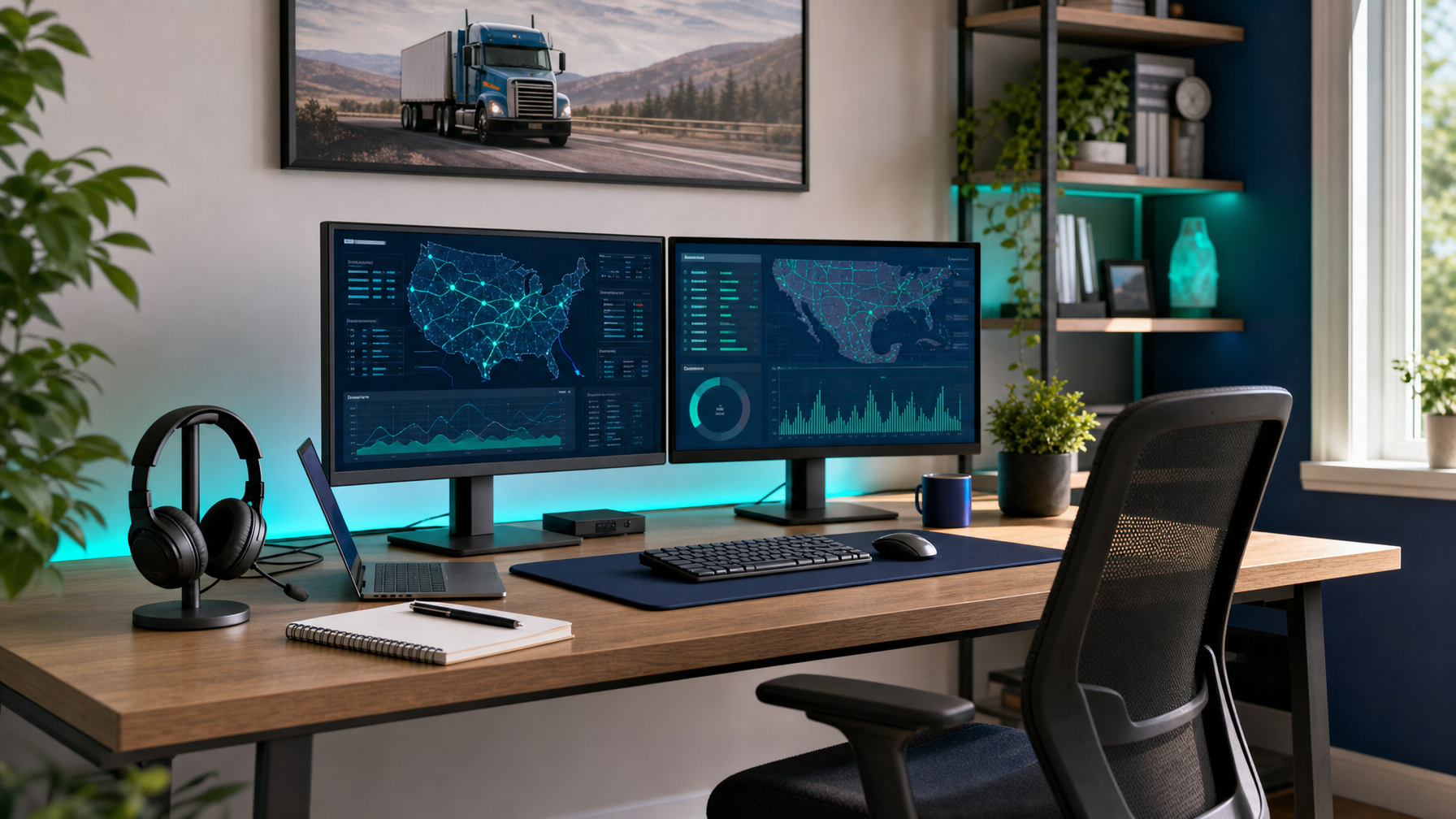
- No Physical Location Required: Independent truck dispatchers work 100% remotely from home using a laptop, phone, and load board software.
- No CDL or Broker License Needed: Dispatchers operate under direct service agreements with motor carriers without needing a $75,000 broker bond.
- Online Accredited Training: Access 50+ hours of video lessons, 100+ operational templates, and 1-on-1 mentorship at Dispatcher 101 for $55/month.
Why Texas Is a Premier Market for Freight Dispatchers
Texas is a major hub for interstate freight traffic, cross-border commerce with Mexico, and energy sector transport. Major freight networks across the state create high demand for independent dispatchers:
- Dallas-Fort Worth Metroplex: Major intermodal rail hubs and distribution centers for national retailers.
- Port of Houston & Gulf Coast: High volume of specialized flatbed, tanker, and heavy-haul freight moving through oil, gas, and chemical industries.
- I-35 & I-10 Corridors: Primary freight arterial highways carrying thousands of dry van and reefer loads daily across state lines.
Independent dispatchers in Texas capitalize on these dense lanes to keep managed owner-operators loaded and profitable.
4 Steps to Start Dispatching Trucks in Texas
Step 1: Learn Texas Freight Lanes & Equipment Types
Understand regional equipment requirements before pitching local motor carriers:
- Dry Vans (53ft): General consumer goods moving between Dallas, Houston, and Midwest distribution centers.
- Reefers (Refrigerated): Produce, food products, and pharmaceuticals moving along the I-35 corridor.
- Flatbeds & Hotshots: Heavy machinery, steel, and oilfield equipment concentrated in West Texas (Permian Basin) and the Houston Ship Channel.
Step 2: Master Core Compliance & Carrier Onboarding
Operational compliance follows federal rules set by the Federal Motor Carrier Safety Administration (FMCSA). You must know how to audit:
- Active Motor Carrier (MC) Authority status.
- Form W-9 and Certificate of Insurance (COI) verification ($1M liability / $100K cargo minimums).
- Dispatch Service Agreements outlining your 5% to 10% commission fee per load.
Step 3: Utilize Digital Freight Tools
Modern dispatching is conducted entirely online. Essential software includes:
- Load Boards: DAT Freight & Analytics or Truckstop.com for finding high-paying spot market loads.
- Digital Document Signers: For signing Rate Confirmations and Bills of Lading (BOL).
- Factoring Software: Ensuring your owner-operators receive quick payment upon load delivery.
Step 4: Enroll in Self-Paced Online Training
Instead of paying thousands for rigid in-person classroom seminars in Dallas or Houston, choose flexible online learning.
Program highlights at Dispatcher 101:
- 50+ Hours of Practical Video Content: Step-by-step walkthroughs of broker phone calls, load board searches, and rate negotiations.
- 100+ Ready-to-Use Templates: Carrier packets, rate calculation sheets, and dispatch service contracts.
- 1-on-1 Mentorship: Direct expert support to help you evaluate business plans and first-load bookings.
Frequently Asked Questions
Do I need a Texas state license to become a truck dispatcher?
No. Independent truck dispatchers provide administrative and logistics management services. No state license, CDL, or $75,000 freight broker bond is required to dispatch trucks.
Can I dispatch Texas trucks while working from another state or from home?
Yes. Because load boards, broker communications, and document signing occur digitally, you can dispatch Texas-based owner-operators from anywhere with an internet connection.
How much do Texas dispatchers charge per truck?
Independent dispatchers typically charge 5% to 10% of the load's gross revenue, averaging $800 to $1,200 per truck each month. Managing 3 to 5 trucks yields between $3,000 and $5,000 per month.
Start Your Texas Dispatching Career Today
Launch your home-based freight dispatching business with confidence. Join over 34,000 enrolled students at Dispatcher 101 and start your accredited training today for just $55/month.