TLDR
- You can start a truck dispatching business from home with low overhead: LLC, phone, computer, agreements, and a freight workflow. No CDL and no truck payment required.
- Stay in the dispatcher role (work for carriers). Broker authority and a $75,000 bond apply when you operate as a freight broker (FMCSA).
- First 90 days: legal basics, tools, outbound carrier sales, tight ops, then retain and review.
- Charge with a written fee model (percent or flat) and invoice on a fixed cadence.
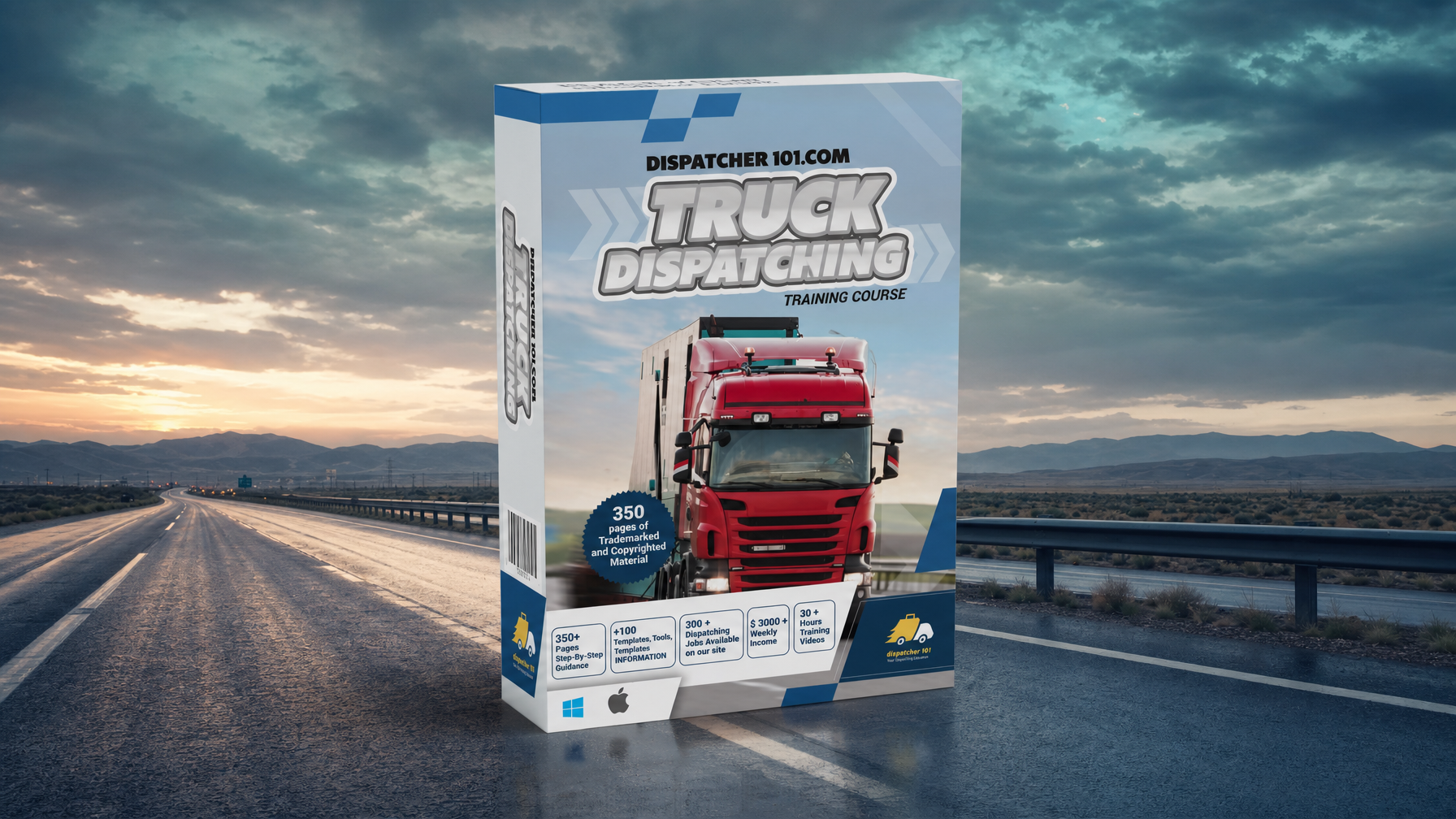
- Learn the craft with a structured program like Dispatcher 101 so your first carriers get professional service.
Why home-based dispatching still works in 2026
Freight still moves on relationships, timing, and execution. Owner-operators still need someone who will fight for rate and plan the next empty. That work runs on a laptop and a phone.
Guides aimed at 2026 starters emphasize the same point: dispatching is one of the lower-overhead entries into trucking when you avoid buying iron and you keep compliance boundaries clean (see practical startup rundowns such as American Truckers LLC's 2026 dispatch startup guide).
Step 1: Confirm the business model
You will:
- Contract with carriers as their dispatcher.
- Find and negotiate loads.
- Coordinate drivers and paperwork.
- Bill the carrier your dispatch fee.
You will not:
- Present yourself as a broker without authority.
- Collect shipper funds as a middleman unless you are properly set up as a broker.
Read the FMCSA broker page before you write a single ad (Broker Registration).
Step 2: Legal and admin foundation
- Form an LLC (or correct entity for your state) to separate personal assets.
- Get an EIN from the IRS.
- Open a business bank account.
- Draft a dispatch service agreement (fee, duties, term, termination, limitations).
- Basic bookkeeping from day one (even a clean spreadsheet beats chaos).
- Check local business license rules for your city/county.
This is the unsexy work that makes you look real on a carrier sales call.
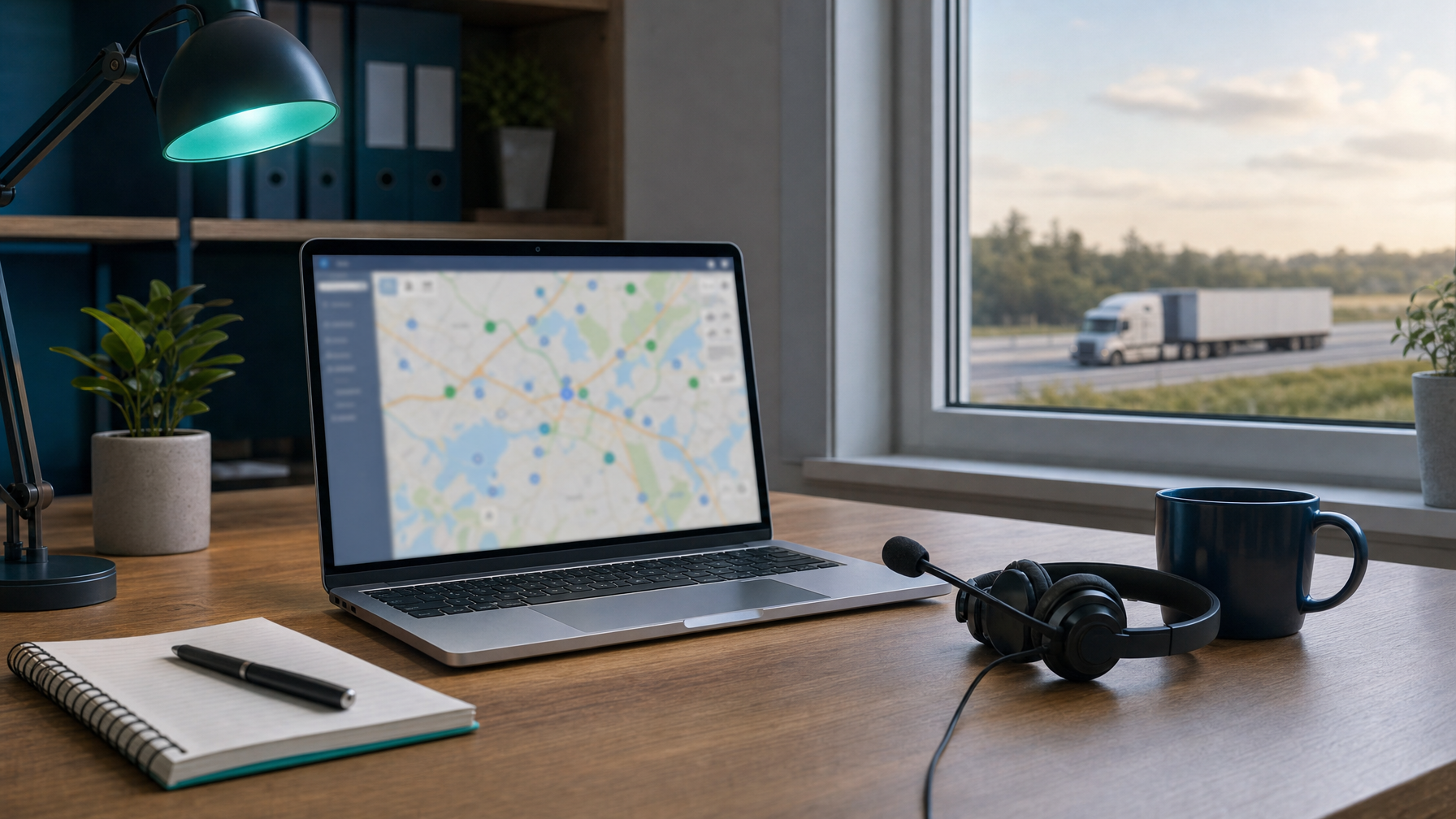
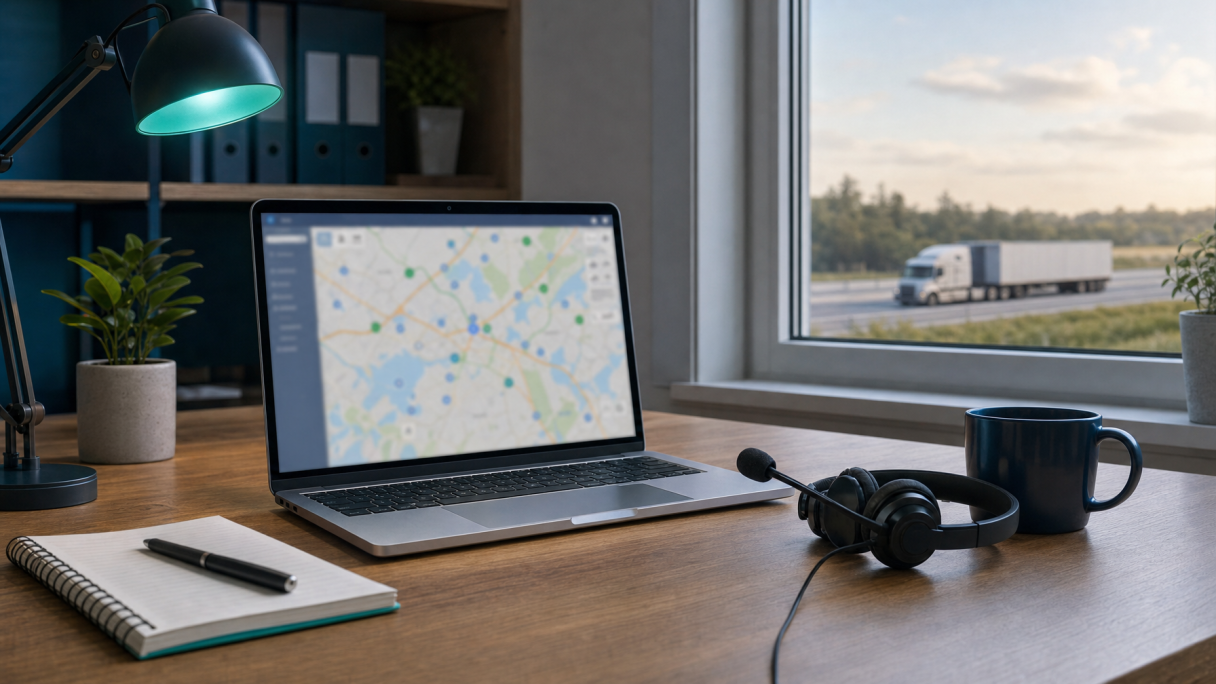
Step 3: Build your home office stack
Must-have
- Reliable laptop and high-speed internet.
- Business phone number (softphone is fine).
- Headset for long negotiation days.
- E-sign tool for agreements.
- Cloud folders for rate cons and PODs.
- Tracker: spreadsheet or simple TMS-style sheet.
Freight tools
- Load board access strategy (some boards are easier for pure dispatch accounts than others; plan around your carriers' credentials when needed).
- Mileage and routing tool.
- FMCSA/SAFER checks for carrier authority status when onboarding.
Optional later
- Website and Google Business Profile.
- CRM for carrier pipeline.
- Paid lead tools once outbound basics work.
Startup cash can stay modest compared with buying a truck. Many 2026 guides frame launch costs in the low thousands or less if you already own a computer (example cost framing).
Step 4: Pick a beachhead niche
"I dispatch everything" is how you sound like everyone else.
Sharper starts:
- Dry van regional lanes you understand.
- Flatbed if you will learn securement and permit basics.
- Reefer if you can handle temp discipline.
- Hotshot / box truck if that is your network.
Niche narrows your script and your load search.
Step 5: Set your pricing before you sell
Common models in the market:
- Percentage of load gross (often discussed in a mid-single-digit band for independents).
- Flat fee per load.
- Hybrid (base + performance).
Industry explainers in 2026 still describe percentage and flat-fee structures as the main independent models (for example, HuntLoad's 2026 revenue overview cites percentage examples in a broad 3-10% range and flat fees as another path).
Pick a number you can defend, put it in the contract, and do not freelance discounts in DMs.
Step 6: Find your first carriers
Channels that work:
- Direct outreach to small fleets and owner-operators.
- Referrals from drivers you already know.
- Industry groups where you give useful rate/lane answers before you pitch.
- Local trucking events and new-authority circles.
Pitch frame
- Who you help.
- What you handle daily.
- Your fee.
- How you report results.
- Easy exit terms if you underperform.
Your goal is not 50 trucks in month one. Your goal is one well-served truck, then three, then a book you can run without dropping balls.
Step 7: Onboard like a pro
For each carrier collect:
- Authority details, insurance contacts, W-9, preferred lanes, home time, rate floor, detention tolerance, and communication preferences.
- Signed dispatch agreement and payment authorization if you use one.
Build a one-page carrier profile you open before every booking day.
Step 8: Run the daily dispatch loop
- Morning positions and HOS reality check.
- Build options; negotiate.
- Confirm in writing; send details to driver.
- Monitor check-calls and exceptions.
- Secure the next leg before the current delivery dies.
- File documents; update the tracker.
Consistency beats heroics.
Step 9: 90-day launch plan
Days 1-14
- Entity, banking, agreement template.
- Phone/CRM/tracker setup.
- Finish a structured training path.
- Write your niche script.
Days 15-45
- 10-20 meaningful carrier conversations per week.
- Sign first clients.
- Book carefully; protect reputation.
- Send weekly scorecards even if the book is tiny.
Days 46-90
- Stabilize multiple trucks or deepen wallet share with current clients.
- Drop bad-fit carriers.
- Document SOPs (how you book, how you escalate, how you invoice).
- Decide tools worth paying for.
Earnings reality (no fantasy screenshots)
Income follows:
- Trucks under management.
- Average revenue those trucks produce.
- Your fee.
- Your retention.
A small book done well beats a huge book of unpaid invoices and one-star reputation. Build for cash collected, not loads posted on social media.
Skills to practice every week
- Live rate negotiation.
- Deadhead and detention math.
- Clear driver updates.
- Calm exception handling.
- Outbound sales reps.
Record yourself (where legal) and improve one habit per week.
Train before you scale your reputation
Carriers remember the dispatcher who stranded them. Get trained on process, documents, and phone work before you mass-pitch. Dispatcher 101 is a direct fit for new home-based dispatchers: online, self-paced, mentorship-backed training so your first 90 days look intentional.
FAQ
How much money do I need to start a truck dispatching business in 2026?
Many people start with well under the cost of a down payment on a truck: entity fees, phone, computer, and software. Keep a cash buffer so you can work before fees arrive.
Do I need a CDL?
No. You need business discipline and freight skills.
Do I need FMCSA broker authority?
Not for a true carrier-side dispatch business. You need it if you operate as a broker (FMCSA).
How long until my first carrier?
It depends on outreach volume and trust signals. Treat it like sales with daily activity, not like waiting for inbound magic.
Can I start while working a 9-5?
Yes if you set honest availability windows. Do not take on more trucks than your response time can support.